IPTV UK: Everything You Need to Know in 2026
Discover everything about IPTV UK in 2026. Learn how British IPTV works, compatible devices, streaming tips, legal considerations, and more.
Internet television has become one of the biggest changes in home entertainment over the past decade. More viewers across the United Kingdom are looking for flexible ways to watch live television, sports, films, documentaries, and on-demand content without relying exclusively on traditional broadcast methods. This growing interest has made IPTV UK one of the most searched television-related topics in Britain.
Whether you have recently heard about IPTV or you are simply curious about how internet television works, understanding the technology is essential before choosing a service. While IPTV has existed for many years, rapid improvements in broadband speeds, smart TVs, streaming devices, and fibre internet have made it significantly more accessible to households across England, Scotland, Wales, and Northern Ireland.
This comprehensive guide explains everything British viewers should know about IPTV in 2026. From understanding the technology to selecting compatible devices and evaluating service quality, this article provides practical information designed to help readers make informed decisions.

What Is IPTV?
IPTV stands for Internet Protocol Television. Unlike traditional terrestrial, satellite, or cable television, IPTV delivers television content using an internet connection instead of conventional broadcasting signals.
Rather than receiving television through an aerial or satellite dish, viewers stream channels and video content directly through broadband. Modern IPTV platforms often combine live television, catch-up services, and extensive video-on-demand libraries within a single application.
The popularity of British IPTV continues to grow because many households already have reliable high-speed internet connections capable of supporting HD and 4K streaming.
Why IPTV UK Continues to Grow
Several factors explain why IPTV has become increasingly popular throughout the United Kingdom.
Consumers now expect entertainment to be available whenever and wherever they choose. Flexible viewing habits have replaced fixed television schedules for many households.
At the same time, fibre broadband coverage has expanded dramatically across the UK, allowing millions of homes to stream high-definition video with minimal buffering.
Another important reason is device compatibility. Viewers are no longer limited to watching television on one screen. IPTV applications work across Smart TVs, Android TV devices, streaming boxes, tablets, smartphones, and desktop computers.
Families also appreciate having personalised viewing experiences where each member can access different content on separate devices.
These technological improvements have contributed to the continued growth of IPTV UK throughout recent years.
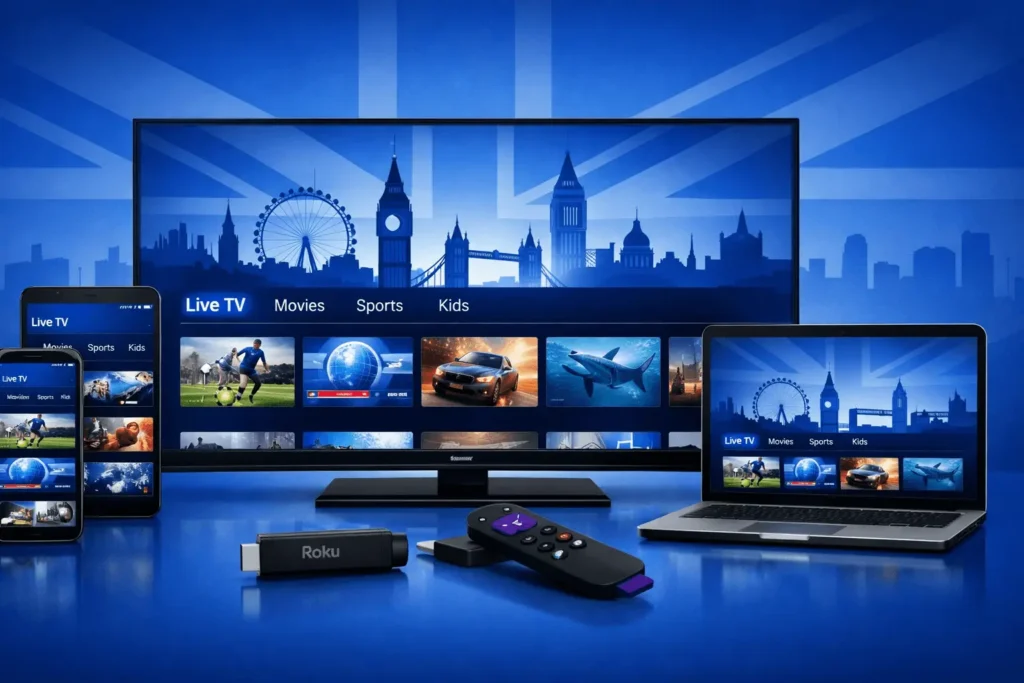
How IPTV Works
Although IPTV may appear complicated, the underlying process is relatively straightforward.
Television content is stored or broadcast from dedicated servers connected to the internet.
When a user selects a channel or programme, the IPTV application sends a request to those servers.
The requested content is then streamed directly over the internet to the viewer’s device.
Unlike traditional broadcasting, IPTV delivers only the content that the individual viewer chooses, making it more efficient and interactive.
This system enables additional features such as pause, replay, catch-up television, electronic programme guides, favourites, and personalised recommendations.
Types of IPTV Services
Not every IPTV platform offers the same viewing experience. Most services generally fall into three main categories.
Live Television
Live television allows viewers to watch programmes as they are being broadcast.
This includes news, entertainment, documentaries, sports, children’s programming, and general television channels.
Many viewers choose IPTV primarily for access to live television delivered over broadband.
Video on Demand
Video on Demand enables users to select films or television series whenever they wish.
Instead of waiting for scheduled broadcasts, viewers simply choose a title from an available catalogue.
This flexibility has become one of IPTV’s biggest advantages.
Catch-Up Television
Catch-up television allows viewers to watch programmes that have already aired.
If someone misses a documentary or television show, catch-up functionality provides another opportunity to watch it later.
Many modern IPTV platforms integrate all three services into a single interface.
Popular Devices for IPTV UK
One of IPTV’s greatest strengths is its flexibility.
British households use a wide variety of compatible devices.
Some of the most common include:
• Smart TVs
• Android TV
• Google TV
• Amazon Fire TV devices
• Apple TV
• Windows PCs
• Mac computers
• Android smartphones
• iPhones and iPads
• Streaming boxes
Many viewers also install IPTV applications on multiple devices, allowing them to continue watching wherever they are.
Choosing the Right Internet Speed
Streaming quality depends heavily on internet performance.
Although exact requirements vary, these recommendations generally provide a smooth experience.
For standard definition:
5 Mbps or faster.
For HD streaming:
10–20 Mbps.
For Full HD:
25 Mbps or higher.
For 4K Ultra HD:
50 Mbps or faster is recommended.
A stable fibre connection often delivers the most consistent results, particularly for households with multiple simultaneous streams.
Using an Ethernet cable instead of Wi-Fi can also improve streaming stability.
Advantages of IPTV
The growing popularity of IPTV UK is driven by several practical advantages.
Flexibility
Users can watch television from virtually anywhere with a reliable internet connection.
Large Content Libraries
Many IPTV platforms combine live television with thousands of on-demand programmes.
Multi-Device Support
One account may be accessible across multiple compatible devices.
Improved Picture Quality
Modern IPTV technology supports HD, Full HD, and increasingly 4K streaming.
Convenient Viewing
Catch-up television, recording features, and electronic programme guides improve the overall viewing experience.
Personalisation
Many applications remember favourite channels, recently watched programmes, and viewing preferences.
Potential Limitations
Although IPTV offers numerous advantages, there are also factors that viewers should understand.
Internet quality directly affects streaming performance.
Slow broadband may cause buffering.
Network congestion during peak hours can occasionally reduce streaming quality.
Older devices may struggle with newer applications.
Users should also verify that any service they use has the necessary rights and complies with applicable laws in their jurisdiction.
Understanding these considerations helps consumers make better-informed decisions.
IPTV UK and Smart Homes
The rise of connected homes has also influenced IPTV adoption.
Modern households increasingly integrate televisions with voice assistants, wireless speakers, smart lighting, and home automation systems.
Many IPTV applications support voice search, allowing viewers to locate programmes quickly.
Cloud synchronisation also enables users to continue watching content across multiple devices without losing their place.
As smart home ecosystems continue evolving, IPTV is expected to become even more integrated into everyday entertainment.
Features to Look for in an IPTV Platform
When comparing IPTV platforms, several features deserve attention.
A user-friendly interface makes navigation much easier.
Fast channel switching improves the overall experience.
Electronic programme guides help users discover upcoming broadcasts.
Search functionality should quickly locate films, series, or channels.
Parental controls are valuable for families.
Multiple language support benefits multilingual households.
Automatic updates ensure applications remain compatible with newer operating systems.
Reliable customer support can also be an important factor when technical assistance is required.
IPTV UK vs Traditional Television
For decades, British households relied primarily on terrestrial broadcasts, satellite television, or cable services to access entertainment. While these delivery methods remain popular, IPTV has introduced a different way of watching television that better aligns with modern viewing habits.
Traditional television typically follows fixed schedules. Viewers tune in at a specific time to watch a programme or record it for later. IPTV, on the other hand, provides greater flexibility. Many platforms combine live channels with catch-up television and on-demand libraries, allowing users to decide what they want to watch and when they want to watch it.
Another major difference is accessibility. Traditional television often requires dedicated hardware such as an aerial, satellite dish, or cable installation. IPTV generally requires only a compatible device and a reliable broadband connection.
As fibre broadband continues expanding across the UK, internet-based television is becoming an increasingly practical option for many households.
What Makes a Good British IPTV Experience?
Not all IPTV platforms deliver the same quality. A positive viewing experience depends on several important factors.
Stable Streaming Performance
Consistent streaming is one of the first things viewers notice. A well-optimised platform should minimise interruptions, maintain stable playback, and adapt smoothly to changing internet speeds.
High-Quality Video
Modern viewers increasingly expect Full HD and 4K resolution where available. Image clarity, colour accuracy, and smooth motion all contribute to a more enjoyable viewing experience.
Fast Navigation
Nobody enjoys waiting several seconds every time they switch channels. Responsive applications with quick loading times create a much more pleasant experience.
User-Friendly Interface
An intuitive interface helps users quickly find channels, films, series, and recently watched content. Simple navigation is especially valuable for families and older users.
Frequent Updates
Television technology evolves rapidly. Applications that receive regular updates tend to remain more secure, compatible, and stable over time.
Internet Requirements for IPTV UK
A reliable internet connection remains one of the most important components of successful IPTV streaming.
Fortunately, broadband infrastructure across the United Kingdom continues to improve every year. Many urban areas now benefit from fibre connections capable of delivering excellent streaming quality.
Several factors influence streaming performance beyond raw download speed.
Connection stability is often more important than occasional speed peaks.
Latency can affect live streaming responsiveness.
Home Wi-Fi quality also plays a significant role.
Large households where several people stream simultaneously should consider higher-speed broadband packages to reduce network congestion.
Whenever possible, connecting a television or streaming device via Ethernet rather than Wi-Fi provides greater stability.
Wi-Fi Tips for Better IPTV Performance
Many buffering complaints are actually caused by home network issues rather than the IPTV technology itself.
Several simple improvements can enhance streaming quality.
Position your wireless router in a central location.
Keep the router away from thick walls and large metal objects.
Restart networking equipment periodically.
Install firmware updates when available.
Use the 5 GHz Wi-Fi band if supported by both the router and streaming device.
Reduce unnecessary network traffic during high-resolution streaming sessions.
These small adjustments often improve overall viewing performance without requiring faster broadband.
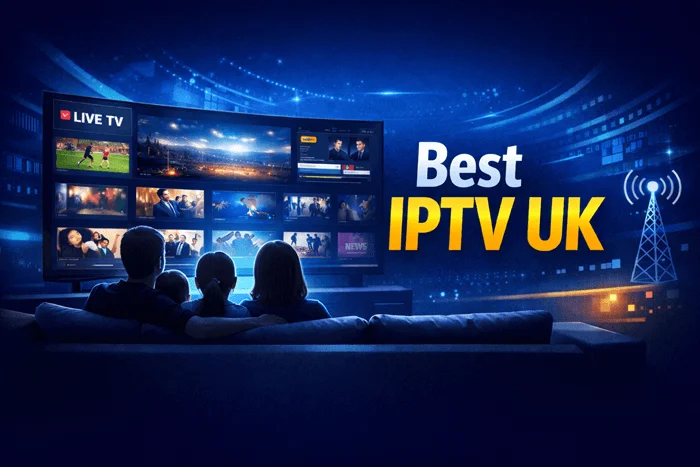
Compatible Devices for British IPTV
The flexibility of IPTV is one of its biggest advantages because viewers can access content on many different devices.
Smart TVs remain the preferred choice for many households because they provide a large display and convenient remote control navigation.
Android TV and Google TV devices continue gaining popularity thanks to their wide application support and regular software updates.
Streaming devices offer another practical solution for televisions that do not include advanced smart features.
Many users also watch IPTV while travelling using smartphones or tablets.
Laptop and desktop computers remain useful options for people who prefer watching from their home office or study.
The growing compatibility across different operating systems allows users to enjoy a consistent viewing experience on multiple screens.
Features That Modern Viewers Appreciate
Technology has transformed television into a far more interactive experience than it was only a few years ago.
Today’s IPTV applications frequently include features that improve convenience.
Electronic programme guides display upcoming schedules in an organised format.
Search functions help locate specific programmes quickly.
Favourite lists allow viewers to organise preferred channels.
Playback controls enable pausing and resuming supported content.
Recently watched sections simplify returning to unfinished programmes.
Some platforms also support multiple user profiles, making recommendations more personalised for each household member.
These features help create a viewing experience that feels both modern and intuitive.
Common IPTV Issues and Practical Solutions
Like any internet-based technology, IPTV may occasionally encounter technical challenges.
Fortunately, many problems have straightforward solutions.
Buffering
Buffering usually results from insufficient bandwidth or temporary network congestion.
Restarting the router, reducing background downloads, or using a wired connection often resolves the issue.
Slow Channel Loading
Applications sometimes require updates.
Keeping both the IPTV application and device operating system current can improve performance.
Audio and Video Synchronisation
Occasionally restarting the application or changing the video decoder settings may correct synchronisation problems.
Freezing
Persistent freezing may indicate unstable internet connectivity or overloaded hardware.
Closing unnecessary background applications often improves overall performance.
Poor Picture Quality
Many IPTV applications automatically adjust image quality according to available bandwidth.
Improving internet stability generally results in higher video quality.
Security Considerations
Whenever using internet-connected applications, cybersecurity should remain a priority.
Users should keep devices updated with the latest software.
Strong passwords help protect personal accounts.
Home Wi-Fi networks should use modern encryption standards.
Downloading applications only from trusted sources reduces security risks.
If an IPTV platform requires account registration, users should review its privacy policy to understand how personal information is collected and processed.
Developing good digital security habits benefits every online service, not only IPTV.
IPTV and Smart TVs
Smart televisions continue dominating the UK television market.
Most modern models include operating systems that support streaming applications directly without additional hardware.
This simplifies installation and reduces cable clutter.
Many smart televisions also include voice search, universal search functions, and personalised recommendations that enhance the overall user experience.
As television manufacturers continue introducing new software features, IPTV integration is expected to become even smoother in future models.
Future Trends for IPTV UK
The IPTV landscape continues evolving rapidly.
Several trends are expected to shape the coming years.
Artificial intelligence is improving personalised content recommendations.
Cloud technology enables smoother synchronisation across devices.
Faster fibre broadband will continue supporting higher-quality streaming.
4K content is becoming increasingly common, while 8K streaming may gradually emerge as internet infrastructure improves.
Interactive television features, including personalised viewing experiences and advanced search capabilities, are also likely to expand.
Consumers increasingly expect entertainment platforms to be flexible, intuitive, and available across every device they own.
As these technologies mature, IPTV will continue playing an important role in the evolution of digital television in the United Kingdom.
IPTV UK vs Traditional Television
For decades, British households relied primarily on terrestrial broadcasts, satellite television, or cable services to access entertainment. While these delivery methods remain popular, IPTV has introduced a different way of watching television that better aligns with modern viewing habits.
Traditional television typically follows fixed schedules. Viewers tune in at a specific time to watch a programme or record it for later. IPTV, on the other hand, provides greater flexibility. Many platforms combine live channels with catch-up television and on-demand libraries, allowing users to decide what they want to watch and when they want to watch it.
Another major difference is accessibility. Traditional television often requires dedicated hardware such as an aerial, satellite dish, or cable installation. IPTV generally requires only a compatible device and a reliable broadband connection.
As fibre broadband continues expanding across the UK, internet-based television is becoming an increasingly practical option for many households.
What Makes a Good British IPTV Experience?
Not all IPTV platforms deliver the same quality. A positive viewing experience depends on several important factors.
Stable Streaming Performance
Consistent streaming is one of the first things viewers notice. A well-optimised platform should minimise interruptions, maintain stable playback, and adapt smoothly to changing internet speeds.
High-Quality Video
Modern viewers increasingly expect Full HD and 4K resolution where available. Image clarity, colour accuracy, and smooth motion all contribute to a more enjoyable viewing experience.
Fast Navigation
Nobody enjoys waiting several seconds every time they switch channels. Responsive applications with quick loading times create a much more pleasant experience.
User-Friendly Interface
An intuitive interface helps users quickly find channels, films, series, and recently watched content. Simple navigation is especially valuable for families and older users.
Frequent Updates
Television technology evolves rapidly. Applications that receive regular updates tend to remain more secure, compatible, and stable over time.
Internet Requirements for IPTV UK
A reliable internet connection remains one of the most important components of successful IPTV streaming.
Fortunately, broadband infrastructure across the United Kingdom continues to improve every year. Many urban areas now benefit from fibre connections capable of delivering excellent streaming quality.
Several factors influence streaming performance beyond raw download speed.
Connection stability is often more important than occasional speed peaks.
Latency can affect live streaming responsiveness.
Home Wi-Fi quality also plays a significant role.
Large households where several people stream simultaneously should consider higher-speed broadband packages to reduce network congestion.
Whenever possible, connecting a television or streaming device via Ethernet rather than Wi-Fi provides greater stability.
Wi-Fi Tips for Better IPTV Performance
Many buffering complaints are actually caused by home network issues rather than the IPTV technology itself.
Several simple improvements can enhance streaming quality.
Position your wireless router in a central location.
Keep the router away from thick walls and large metal objects.
Restart networking equipment periodically.
Install firmware updates when available.
Use the 5 GHz Wi-Fi band if supported by both the router and streaming device.
Reduce unnecessary network traffic during high-resolution streaming sessions.
These small adjustments often improve overall viewing performance without requiring faster broadband.
Compatible Devices for British IPTV
The flexibility of IPTV is one of its biggest advantages because viewers can access content on many different devices.
Smart TVs remain the preferred choice for many households because they provide a large display and convenient remote control navigation.
Android TV and Google TV devices continue gaining popularity thanks to their wide application support and regular software updates.
Streaming devices offer another practical solution for televisions that do not include advanced smart features.
Many users also watch IPTV while travelling using smartphones or tablets.
Laptop and desktop computers remain useful options for people who prefer watching from their home office or study.
The growing compatibility across different operating systems allows users to enjoy a consistent viewing experience on multiple screens.
Features That Modern Viewers Appreciate
Technology has transformed television into a far more interactive experience than it was only a few years ago.
Today’s IPTV applications frequently include features that improve convenience.
Electronic programme guides display upcoming schedules in an organised format.
Search functions help locate specific programmes quickly.
Favourite lists allow viewers to organise preferred channels.
Playback controls enable pausing and resuming supported content.
Recently watched sections simplify returning to unfinished programmes.
Some platforms also support multiple user profiles, making recommendations more personalised for each household member.
These features help create a viewing experience that feels both modern and intuitive.
Common IPTV Issues and Practical Solutions
Like any internet-based technology, IPTV may occasionally encounter technical challenges.
Fortunately, many problems have straightforward solutions.
Buffering
Buffering usually results from insufficient bandwidth or temporary network congestion.
Restarting the router, reducing background downloads, or using a wired connection often resolves the issue.
Slow Channel Loading
Applications sometimes require updates.
Keeping both the IPTV application and device operating system current can improve performance.
Audio and Video Synchronisation
Occasionally restarting the application or changing the video decoder settings may correct synchronisation problems.
Freezing
Persistent freezing may indicate unstable internet connectivity or overloaded hardware.
Closing unnecessary background applications often improves overall performance.
Poor Picture Quality
Many IPTV applications automatically adjust image quality according to available bandwidth.
Improving internet stability generally results in higher video quality.
Security Considerations
Whenever using internet-connected applications, cybersecurity should remain a priority.
Users should keep devices updated with the latest software.
Strong passwords help protect personal accounts.
Home Wi-Fi networks should use modern encryption standards.
Downloading applications only from trusted sources reduces security risks.
If an IPTV platform requires account registration, users should review its privacy policy to understand how personal information is collected and processed.
Developing good digital security habits benefits every online service, not only IPTV.
IPTV and Smart TVs
Smart televisions continue dominating the UK television market.
Most modern models include operating systems that support streaming applications directly without additional hardware.
This simplifies installation and reduces cable clutter.
Many smart televisions also include voice search, universal search functions, and personalised recommendations that enhance the overall user experience.
As television manufacturers continue introducing new software features, IPTV integration is expected to become even smoother in future models.
Future Trends for IPTV UK
The IPTV landscape continues evolving rapidly.
Several trends are expected to shape the coming years.
Artificial intelligence is improving personalised content recommendations.
Cloud technology enables smoother synchronisation across devices.
Faster fibre broadband will continue supporting higher-quality streaming.
4K content is becoming increasingly common, while 8K streaming may gradually emerge as internet infrastructure improves.
Interactive television features, including personalised viewing experiences and advanced search capabilities, are also likely to expand.
Consumers increasingly expect entertainment platforms to be flexible, intuitive, and available across every device they own.
As these technologies mature, IPTV will continue playing an important role in the evolution of digital television in the United Kingdom.
BEST IPTV IN EUROPE & USA/CANADA
